Physics, First Principles.Understand the Laws. Master the Reasoning.
A rigorous, interactive physics and mathematics learning platform. Learn to model physical phenomena, derive relationships mathematically, and solve unfamiliar problems — not simply memorize formulas.
Academic Leadership:Physics Ph.D. · Former U.S. DOE National Laboratory Researcher · College Board AP® Physics Exam Reader
Interactive Model
02 · LEARNING PHILOSOPHY
From Formula to Understanding
Memorizing equation sheets fails the moment a problem introduces a new constraint or geometry. Our curriculum trains students in the three-stage reasoning cycle used by physicists.
01
Intuition
Understand the phenomenon.
Before writing a single equation, students learn to interrogate the physical system: identify symmetries, isolate conserved quantities, and test extreme limiting cases (θ→0∘ vs. θ→90∘) so equations have physical meaning.
02
Modeling
Represent it mathematically.
Define system boundaries explicitly, construct rigorous free-body diagrams, field maps, or potential energy curves, and translate physical laws directly into coupled algebraic or differential equations.
03
Reasoning
Solve unfamiliar problems.
Synthesize multiple principles—dynamics, conservation laws, and calculus—to solve non-routine AP Free-Response and F=ma Olympiad problems while verifying dimensional and physical consistency.
03 · THE DIGITAL PRODUCT
Physics You Can Explore
Experience how students learn inside our platform. Adjust physical parameters in real time, inspect force decompositions and symbolic equations, or work through a diagnostic problem with instant conceptual feedback.
Φ
USA Physics Interactive Lab
Module: Mechanics — 2D Projectile Kinematics
Live Simulation · 2D Trajectory & Vector Decomposition
1.37s
Current X24.2 m
Current Y15.0 m
Speed |v(t)|18.2 m/s
Max Range R63.7 m
Parameters
Initial Velocity (m/s)25
Launch Angle (θ)45°
Gravity g (m/s²)9.81
Equation View
Vertical Position y(t)
y(t) = v₀·sin(θ)·t − ½·g·t²
y(1.37) = 25·sin(45°)·1.37 − 4.91·1.37²
= 15.01 m
Maximum Horizontal Range
R = (v₀² · sin(2θ)) / g
= 63.71 m
Pos y(t) vs. Timey_max = 15.9m
01 · Interactive Lessons
260+ HTML5 Physics & Math Notebooks
Every course is built around interactive lessons featuring embedded simulations, derivations, digital workpads, and immediate comprehension checks.
02 · Targeted Diagnostics
Concept-Level Error Analysis
When a student misses a problem, the system distinguishes between physical modeling errors, vector geometry mistakes, and algebraic/calculus slips.
03 · Exam Readiness
Timed AP® & F=ma Simulation Exams
Full-length MCQ and Free-Response mock examinations mirror official College Board and USAPhO timing, rigor, and scoring standards.
04 · LEARNING PATHWAYS
A Structured Path to Mastery
Select your current stage below to answer three essential questions: Where am I right now?What should I study next? and What capabilities will I build?
01 · Where Am I Now?
Current Baseline & Readiness
Fluent in Algebra 1 & Geometry (or concurrently taking Algebra 2 / AP Precalculus); enrolled in or preparing for AP Physics 1 or AP Physics 2.
02 · What Should I Learn Next?
Recommended Course Sequence
AP Physics 1 (Module II), AP Physics 2 (Module III), and AP Precalculus for Physicists (Module X).
03 · What Capabilities Will I Build?
Analytical & Exam Outcomes
Model multi-body mechanics, rotational dynamics, oscillations, fluids, thermodynamics, and circuits from first principles; excel on College Board AP Free-Response derivations.
24 in-depth interactive lessons with 3D field visualizations, continuous charge integration modules, and rigorous AP FRQ practice.
Capability Built
Command of calculus-based electromagnetism and readiness for the AP Physics C: E&M examination.
Full Interactive Curriculum & Labs365-day platform access
$999
Module VIAdvanced & Calculus· Grades 9–12
Available
Competition Physics — F=ma & USAPhO Training
Non-routine problem solving, symmetry arguments, and analytical mechanics for the USA Physics Olympiad track.
Objective
Bridge the gap between standard AP coursework and Olympiad-level mechanics required to qualify for the USAPhO Semifinal.
Methodology & System
Structured problem-solving heuristics, timed 75-minute F=ma exam simulations, and deep post-mortem error analysis.
Capability Built
Rigorous preparation for the AAPT F=ma examination and USAPhO semifinal qualification.
Full Interactive Curriculum & Labs365-day platform access
$1,199
05 · EVIDENCE
Expertise. Method. Outcomes.
Academic authority rests on verifiable research credentials, transparent pedagogical standards, and documented student progression.
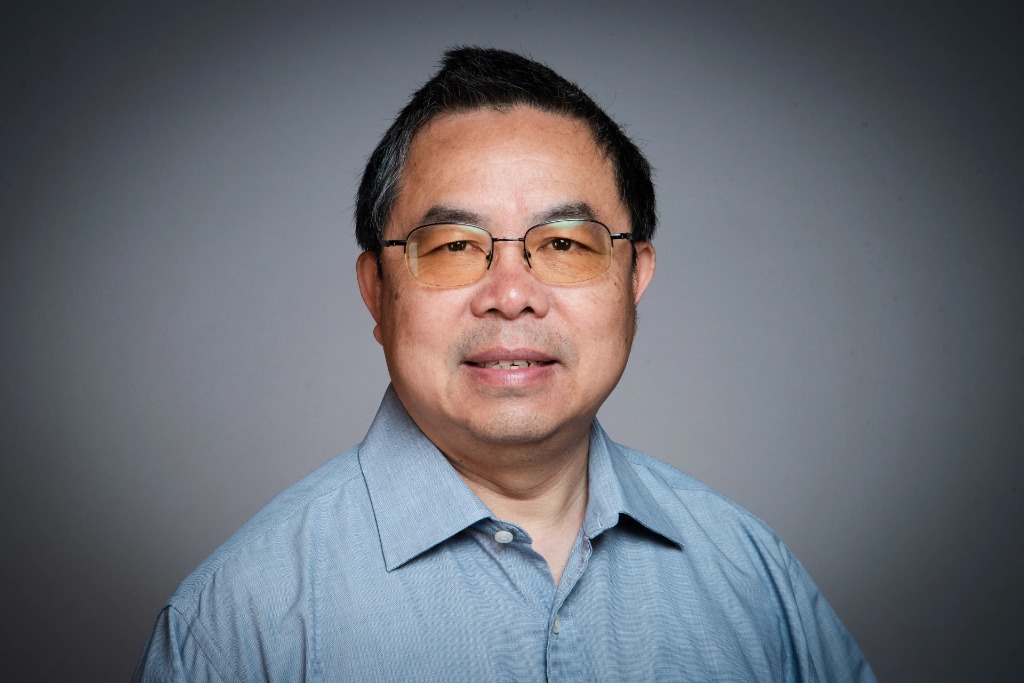
Lead Physics Faculty
Director of Physics & Curriculum
Leads curriculum architecture, physical modeling pedagogy, and AP / Olympiad examination readiness across all physics modules.
Academic Qualification
Ph.D. in Physics
Doctoral research in theoretical, experimental, and computational physics.
Research Provenance
Former U.S. DOE National Laboratory Researcher
Conducted scientific research within the U.S. Department of Energy national laboratory system.
Assessment Authority
College Board AP® Physics Exam Reader
Direct experience evaluating official AP Physics Free-Response examinations and rubric standards.
Teaching Track Record
20+ Years Physics Research & Classroom Instruction
Two decades guiding secondary and university-bound scholars from foundational mechanics to USAPhO.
Platform & Diagnostics Lead
Director of Computational Systems & Diagnostics
Architects the platform's adaptive diagnostic engine, knowledge-graph tracking, and computational modeling tools.
Academic Qualification
Ph.D. in Computer Science
Specialized in intelligent diagnostics, mathematical modeling, and computational systems.
Research Provenance
Former IBM Research Scientist & NIST-Supported Researcher
Led federally supported and industrial research in systems modeling and analytical telemetry.
Technical Innovation
Holder of 3 U.S. Patents
Patented innovations in automated system monitoring, diagnostics, and control.
Mentorship
10+ Years Quantitative & Computational Mentorship
Mentoring students in scientific computing, algorithmic reasoning, and quantitative research.
Engineering & Systems Faculty
Director of Engineering Applications
Connects theoretical electromagnetism, mechanics, and signal analysis to real-world engineering systems.
Academic Qualification
M.S. in Electrical Engineering, Tsinghua University
Rigorous training in electromagnetism, systems engineering, and mathematical physics.
Instructional Background
12 Years of University Engineering Pedagogy
Former university lecturer in electronic engineering and telecommunications R&D.
Industry Experience
15+ Years Global Technology & Engineering Leadership
Bridging classroom physical principles with applied engineering design and technical communication.
DOCUMENTED STUDENT PROGRESSION
Verified Academic Outcomes & Case Records
When students learn to model physical systems from first principles rather than memorizing problem templates, examination performance and university readiness follow naturally.
AP® ExaminationsScore of 5 Mastery
Consistent top scores across AP Physics 1, AP Physics 2, and AP Physics C (Mechanics & E&M).
Physics OlympiadF=ma & USAPhO
Structured progression from first-year mechanics to USAPhO Semifinalist and Honorable Mention standing.
2026 Admissions Cohort13 Top STEM Placements
Scholars admitted to MIT, Harvard, Brown, and Dartmouth with advanced physics as their core academic anchor.
Accelerated Cohort15-Session AP C
Full calculus-based AP Physics C: Mechanics mastery achieved in 15 structured sessions.
Case Record 01 · Olympiad Progression
From Standard High School Physics to USAPhO Semifinalist Recognition
Baseline
10th-grade student with a biology-focused background seeking solid AP Physics preparation.
Method
Completed structured AP mechanics modeling before advancing into the F=ma Competition Track—focusing on conserved quantities, non-inertial frames, and limiting-case analysis rather than rote problem grinding.
Verified Outcome
Qualified for the USA Physics Olympiad (USAPhO) Semifinals in 10th grade and earned national Honorable Mention recognition.
Case Record 02 · Accelerated Calculus Mechanics
AP Physics C: Mechanics Mastery in a 15-Session Cohort
Baseline
Cohort of student-athletes starting AP Physics C: Mechanics from scratch in mid-February following the F=ma exam.
Method
15 high-density sessions integrating differential kinematics, variable-force work integrals, and rigid-body rotational dynamics with targeted simulation exams.
Verified Outcome
Students mastered the complete calculus-based mechanics syllabus in under three months, reporting that the official AP exam felt straightforward compared to platform simulations.
Case Record 03 · Conceptual Turnaround
Five-Month Mid-Year Restructuring to an AP Physics Score of 5
Baseline
Student joined mid-academic year struggling with disconnected formulas and low test confidence.
Method
Rebuilt the student's problem-solving workflow around systematic free-body isolation, energy-momentum synthesis, and weekly diagnostic gap remediation.
Verified Outcome
Achieved a verified score of 5 on the official College Board AP Physics examination.
Case Record 04 · University Transfer & STEM Readiness
From Public University General Physics to Harvard Engineering
Baseline
Undergraduate student at a public university seeking deeper analytical rigor in physics and engineering.
Method
Intensive first-principles training in calculus-based mechanics, electromagnetism, and quantitative problem modeling.
Verified Outcome
Successfully transferred into Harvard University to pursue a Joint Concentration in Engineering.
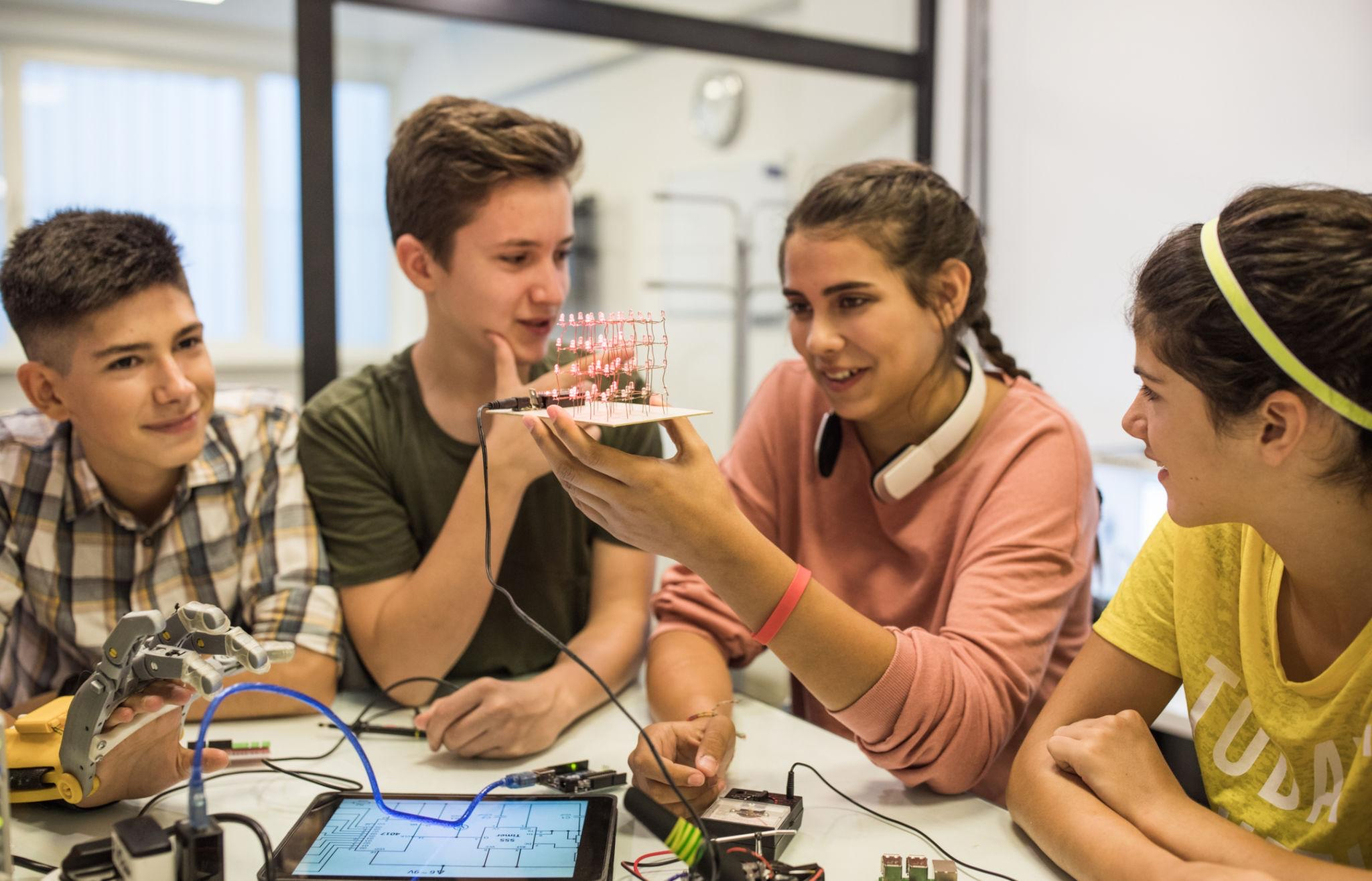
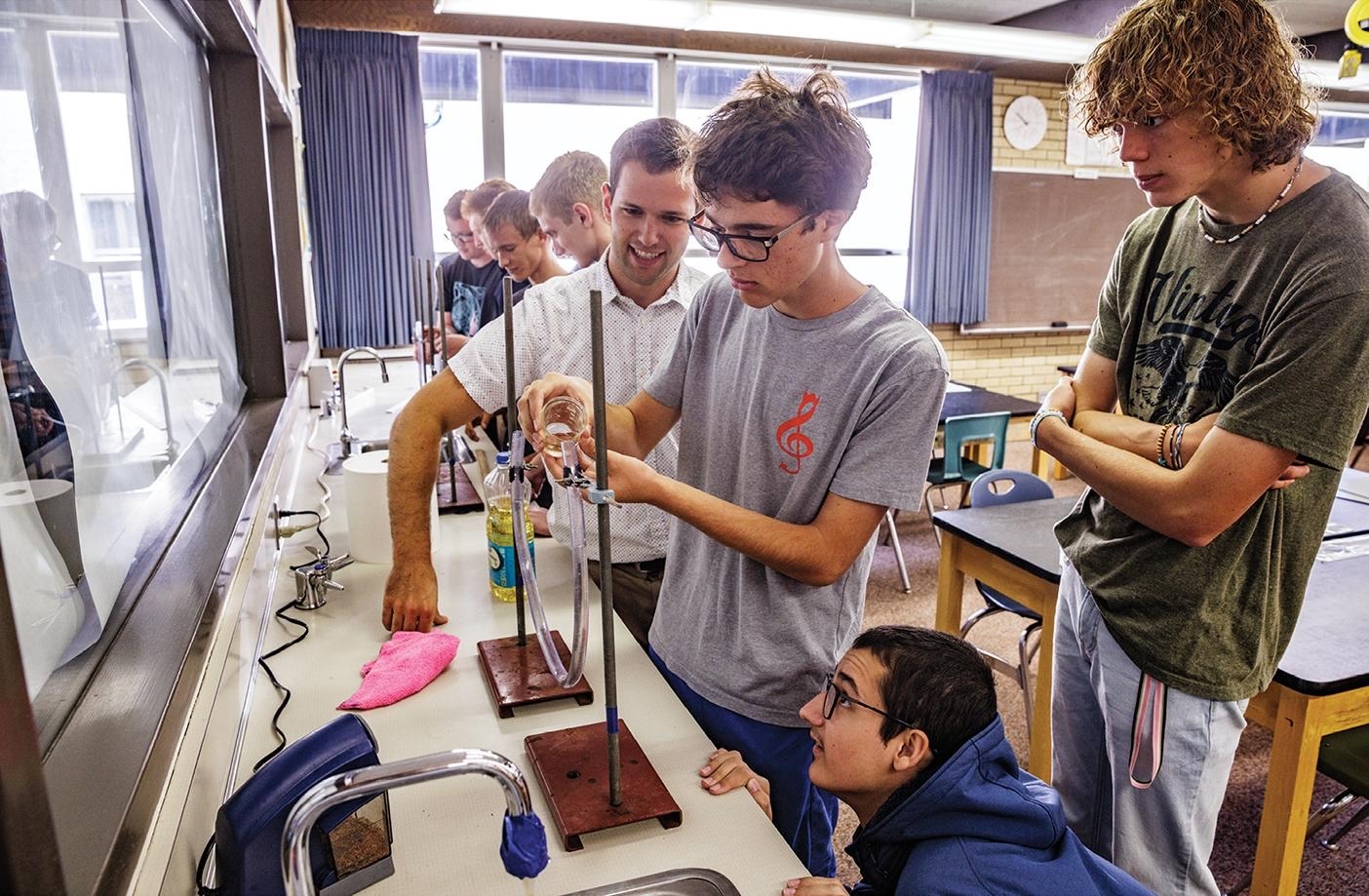
Laboratory & Classroom Instruction · Lexington, MA
Our learning platform combines PhD-authored curriculum and teacher-reviewed problem sets with adaptive diagnostic analysis. Every reported question, diagram, or derivation is reviewed directly by our physics faculty and updated promptly to maintain rigorous scientific accuracy.
06 · NEXT STEP
Find Your Next Step in Physics
Whether you are beginning your first physics course, preparing for AP examinations, or training for the F=ma Olympiad, start with an objective assessment of your current readiness.
Self-Paced Assessment
Take the Interactive Academic Diagnostic
Evaluate conceptual intuition and mathematical readiness across kinematics, Newtonian dynamics, conservation laws, and calculus. Receive an immediate breakdown of strengths and a recommended starting module.
Personalized Curriculum Planning
Schedule an Academic Consultation
For families seeking a tailored multi-year physics and mathematics trajectory, 1-on-1 faculty mentorship, or specialized F=ma competition preparation, speak directly with our academic team.